Solution engineering brief
Battery Electrical Insulation Components
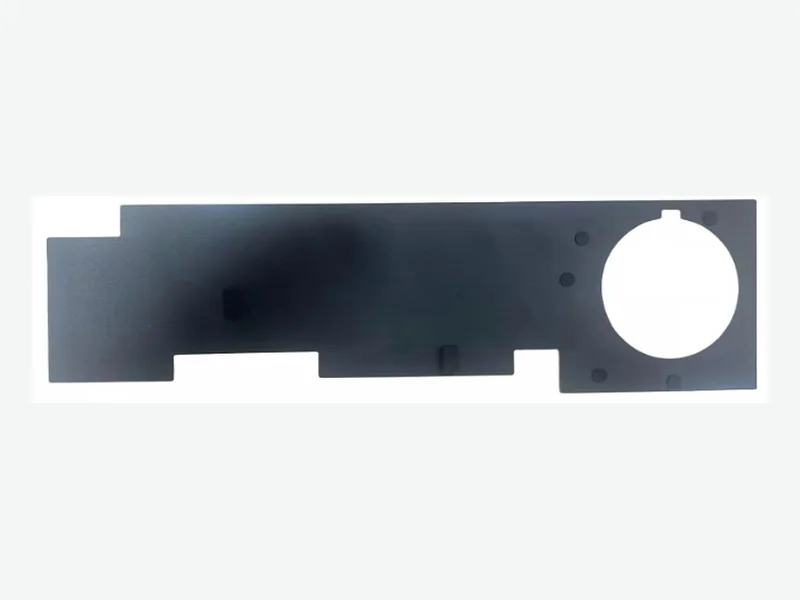
Die-cut and formed insulation for busbars, cells, modules and pack interfaces with evidence tied to grade and thickness.
The engineering problem
Start with the installed interface.
Material dielectric strength does not by itself establish safe working voltage, creepage, edge coverage or lifetime in a battery assembly.
We convert PET, PI, FR-PC and mica families around the voltage, geometry, temperature, handling, forming and assembly requirements of the selected position.
Position and function
Where this component works—and what it must do
- Cell top and terminal area
- Busbar and interconnect
- Module wall and end plate
- Pack lid and enclosure
- Electronics and sensing interfaces
- Maintain dielectric separation
- Cover conductive edges and surfaces
- Support creepage and clearance design
- Combine folding, adhesive and assembly features
Selection logic
Decision data customers and engineers expect
| Decision dimension | What must be defined |
|---|---|
| Electrical duty | Define voltage type, working and transient levels, pollution environment and required standard. |
| Material | Compare thickness, temperature, dielectric evidence, rigidity and forming behavior by exact grade. |
| Geometry | Review edge radius, folds, cutouts, tolerance and potential damage during assembly. |
| Aging | State humidity, thermal cycling, fluid exposure and post-conditioning acceptance. |
Data required
Send these inputs for a useful first review
- Working and transient voltage
- Installation position and adjacent conductors
- Material preference and thickness limit
- Drawing with creepage-critical edges
- Temperature, humidity and aging conditions
Continue the evaluation
Related engineering pathways
Frequently asked questions
Clear answers before sampling
Does dielectric strength equal working voltage?
No. Short-time material testing is not a lifetime working-voltage rating. System geometry, thickness, aging and safety factors remain necessary.
When is PI preferred over PET?
PI is often evaluated for higher-temperature or thinner-film demands, while PET can offer a practical balance of cost and converting. Exact grade data decides.
Can insulation parts include adhesive and folds?
Yes, where the material and drawing support the process. Adhesive, liner, crease and forming details become part of the approved construction.
Drawing-led response