Application engineering brief
EV Battery Electrical Insulation
Converted film, sheet and mica components for high-voltage cell, module and pack interfaces.
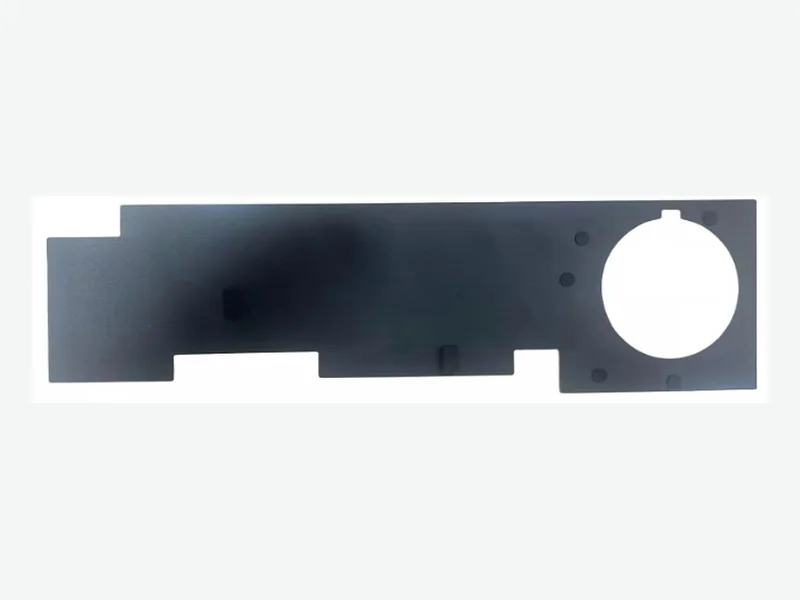
The engineering problem
Start with the installed interface.
EV insulation must survive geometry, assembly damage, temperature, vibration, humidity and fluid exposure—not only a short coupon test.
We review material family, thickness, edge coverage, forming and adhesive around the target voltage and environmental duty.
Position and function
Where this component works—and what it must do
- Cell top
- Module side and end plate
- Pack lid
- Cooling plate interface
- High-voltage component cover
- Surface coverage
- Edge isolation
- Creepage support
- Barrier and insulation stack integration
Selection logic
Decision data customers and engineers expect
| Decision dimension | What must be defined |
|---|---|
| Voltage | Separate working, transient and test voltage. |
| Edges | Identify cut, formed and abrasion-sensitive features. |
| Environment | Define humidity, fluid and thermal conditioning. |
| Release | Tie evidence to exact grade, thickness and construction. |
Data required
Send these inputs for a useful first review
- Electrical duty and standard
- Position and adjacent conductors
- Drawing and edge features
- Temperature and fluid exposure
- Material preference and quantities
Continue the evaluation
Related engineering pathways
Frequently asked questions
Clear answers before sampling
Can VOLTFEND recommend PET or PI?
We can compare candidates after the temperature, voltage, thickness, forming and cost inputs are clear.
Does a thicker film always solve the risk?
Not necessarily. Edges, voids, creepage, processing damage and assembly geometry remain important.
Can insulation be laminated?
Yes where the film, adhesive and process are compatible; the complete stack must be documented.
Drawing-led response