Product engineering brief
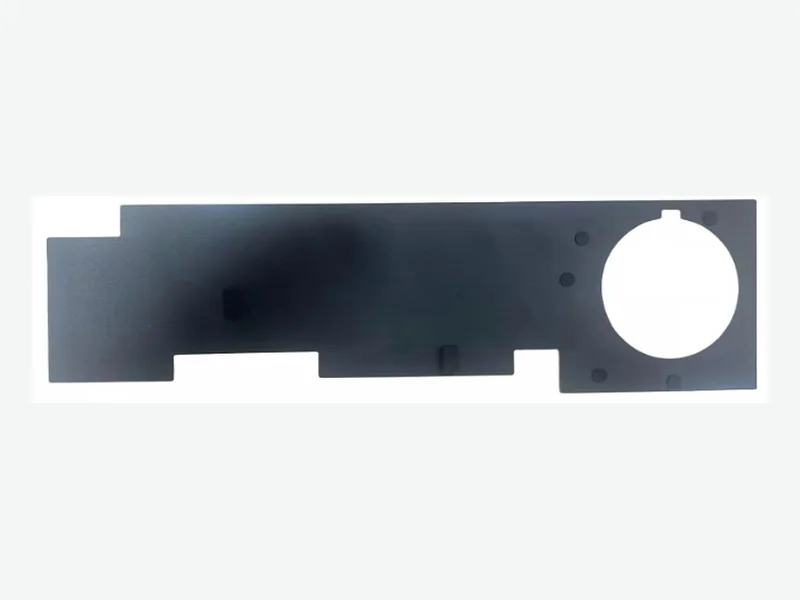
PET, PI & FR-PC Battery Insulation Parts
Precision-cut film and sheet insulation selected around voltage, temperature, forming and assembly requirements.
The engineering problem
Start with the installed interface.
PET, PI and FR-PC have different temperature, stiffness, dielectric and forming trade-offs; a family name is not a finished specification.
We die cut, kiss cut, laminate and prepare assembly features subject to material and drawing feasibility.
Position and function
Where this component works—and what it must do
- Cell top
- Module wall
- Pack lid
- Cooling interface
- High-voltage cover
- Surface insulation
- Edge coverage
- Folded dielectric barrier
- Adhesive-backed location
Selection logic
Decision data customers and engineers expect
| Decision dimension | What must be defined |
|---|---|
| Material | Choose exact grade based on duty and evidence. |
| Thickness | Balance dielectric, space, stiffness and forming. |
| Shape | Define folds, tabs, cutouts and edge radius. |
| Aging | Confirm post-environment electrical acceptance. |
Engineering data
Available parameters and validation status
| Parameter | Value / range | Condition | Method | Evidence state |
|---|---|---|---|---|
| PET thickness | 0.012–0.500 mm | Define with application | Grade / project specific | Available range |
| PI thickness | 0.0127–0.125 mm | Define with application | Grade / project specific | Available range |
| Dielectric strength | 154–350 kV/mm | Selected film examples; grade, thickness and method required | Grade / project specific | Typical material value |
| Converted tolerance | Drawing and material dependent | Define with application | Grade / project specific | Customizable target |
Ranges are selection windows or material-family references, not universal guarantees. Final values are tied to the approved grade, converted construction, thickness, conditioning and test method.
Data required
Send these inputs for a useful first review
- Voltage and insulation target
- Temperature range
- Drawing and fold requirements
- Adhesive/substrate
- Test and document needs
Continue the evaluation
Related engineering pathways
Frequently asked questions
Clear answers before sampling
Which is better, PET or PI?
Neither is universally better. Temperature, thickness, electrical, forming and cost requirements determine the candidate.
Can FR-PC be thermoformed?
Some grades can be formed, but radius, draw, thickness and flame evidence must be reviewed.
Are edges inspected?
Critical outline, burr/damage, fold and adhesive features can be included in the inspection plan.
Drawing-led response