Solution engineering brief
Battery Compression & Expansion Management
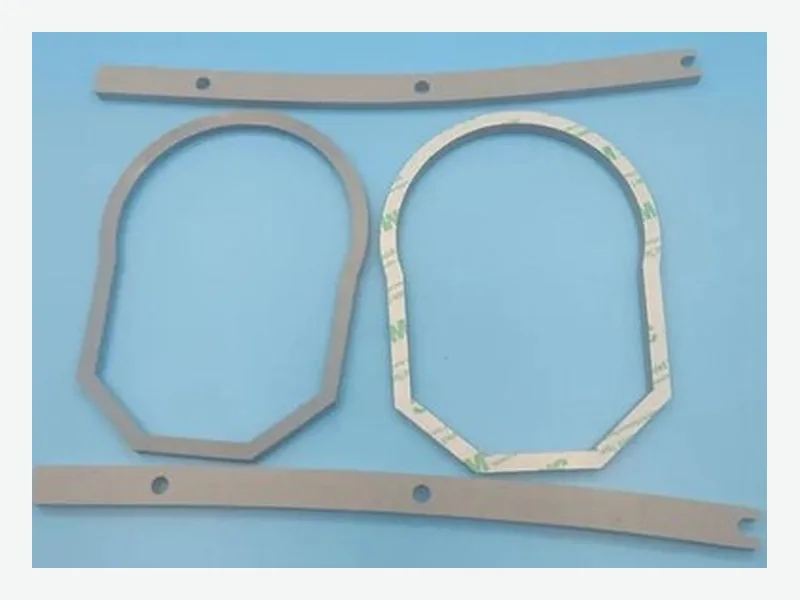
Custom pads specified by pressure–strain behavior, expansion window, aging and module constraint.
The engineering problem
Start with the installed interface.
Cell swelling and tolerance variation change interface pressure throughout battery life. Thickness or hardness alone cannot define a reliable pad.
We translate the module gap, beginning- and end-of-life expansion and target pressure window into a converting-ready pad construction and validation plan.
Position and function
Where this component works—and what it must do
- Cell-to-cell spacing
- Pouch-cell face
- Module end plate
- Module side restraint
- Pack cushioning interface
- Accommodate dimensional growth
- Maintain a defined pressure window
- Absorb manufacturing tolerance
- Provide optional dielectric or flame-retardant functions
Selection logic
Decision data customers and engineers expect
| Decision dimension | What must be defined |
|---|---|
| Force window | Define minimum and maximum pressure across cell life and temperature. |
| Working strain | Use actual gap and tolerance to calculate minimum, nominal and maximum compression. |
| Aging | Evaluate set, stress relaxation and recovery after defined time and environmental conditioning. |
| Assembly | Specify adhesive, liner, pull tab, placement datum and delivery format. |
Data required
Send these inputs for a useful first review
- Cell format and face dimensions
- Initial gap and tolerance stack
- Expansion range or force target
- Temperature, time and environmental cycle
- Pad outline, adhesive and annual volume
Continue the evaluation
Related engineering pathways
Frequently asked questions
Clear answers before sampling
What compression percentage should we use?
There is no universal value. The allowable strain depends on the selected grade’s pressure curve, cell force limits, gap tolerance and aging requirement.
Is compression set the same as stress relaxation?
No. Set describes retained deformation after release, while stress relaxation tracks loss of force under maintained strain.
Can one pad combine compression and insulation?
Potentially, but dielectric and mechanical performance must be verified for the complete construction and converted geometry.
Drawing-led response