Product engineering brief
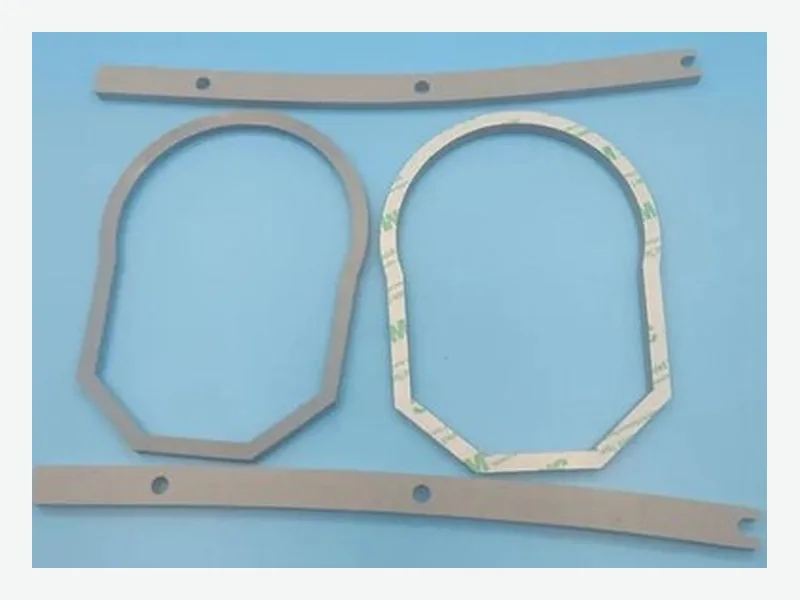
Silicone Battery Compression Pads
Custom die-cut silicone-family pads specified by installed strain, force, aging and environmental duty.
The engineering problem
Start with the installed interface.
Hardness and thickness do not capture lifetime pressure behavior. The relevant grade needs pressure–strain and aging data.
We convert silicone-based pads with adhesive, liners, tabs, frames and cutouts after the module force and assembly window are defined.
Position and function
Where this component works—and what it must do
- Cell face
- Module end plate
- Pack interface
- Electronics and cooling interface
- Force distribution
- Expansion accommodation
- Gap filling
- Optional insulation and flame-performance selection
Selection logic
Decision data customers and engineers expect
| Decision dimension | What must be defined |
|---|---|
| Curve | Use pressure versus strain for the exact grade and thickness. |
| Aging | Define time, temperature, compression and recovery measurement. |
| Tolerance | Calculate strain at gap min and max. |
| Assembly | Specify tack, liner, tab and placement datum. |
Engineering data
Available parameters and validation status
| Parameter | Value / range | Condition | Method | Evidence state |
|---|---|---|---|---|
| Thickness | 1.0–3.0 mm | Define with application | Grade / project specific | Available range |
| Density | 112–400 kg/m³ | Representative candidate-family range | Grade / project specific | Typical material value |
| Pressure at 25% strain | 10.3–83 kPa | Representative grade range; not universal | Grade / project specific | Typical material value |
| Compression set / relaxation | Grade and condition specific | Define with application | Grade / project specific | Application validation required |
Ranges are selection windows or material-family references, not universal guarantees. Final values are tied to the approved grade, converted construction, thickness, conditioning and test method.
Data required
Send these inputs for a useful first review
- Gap and tolerance
- Target pressure window
- Expansion range
- Temperature/aging condition
- Drawing and bonding surface
Continue the evaluation
Related engineering pathways
Frequently asked questions
Clear answers before sampling
What compression range is available?
A practical range is grade-specific and must be checked against the force curve and module limits.
Can pads be flame-retardant?
Candidate grades may have material-level flame evidence; exact rating, thickness and system relevance must be confirmed.
Can pads be kiss-cut on a liner?
Yes, depending on geometry, adhesive and assembly format.
Drawing-led response