Application overview
ESS Battery Thermal Runaway Protection
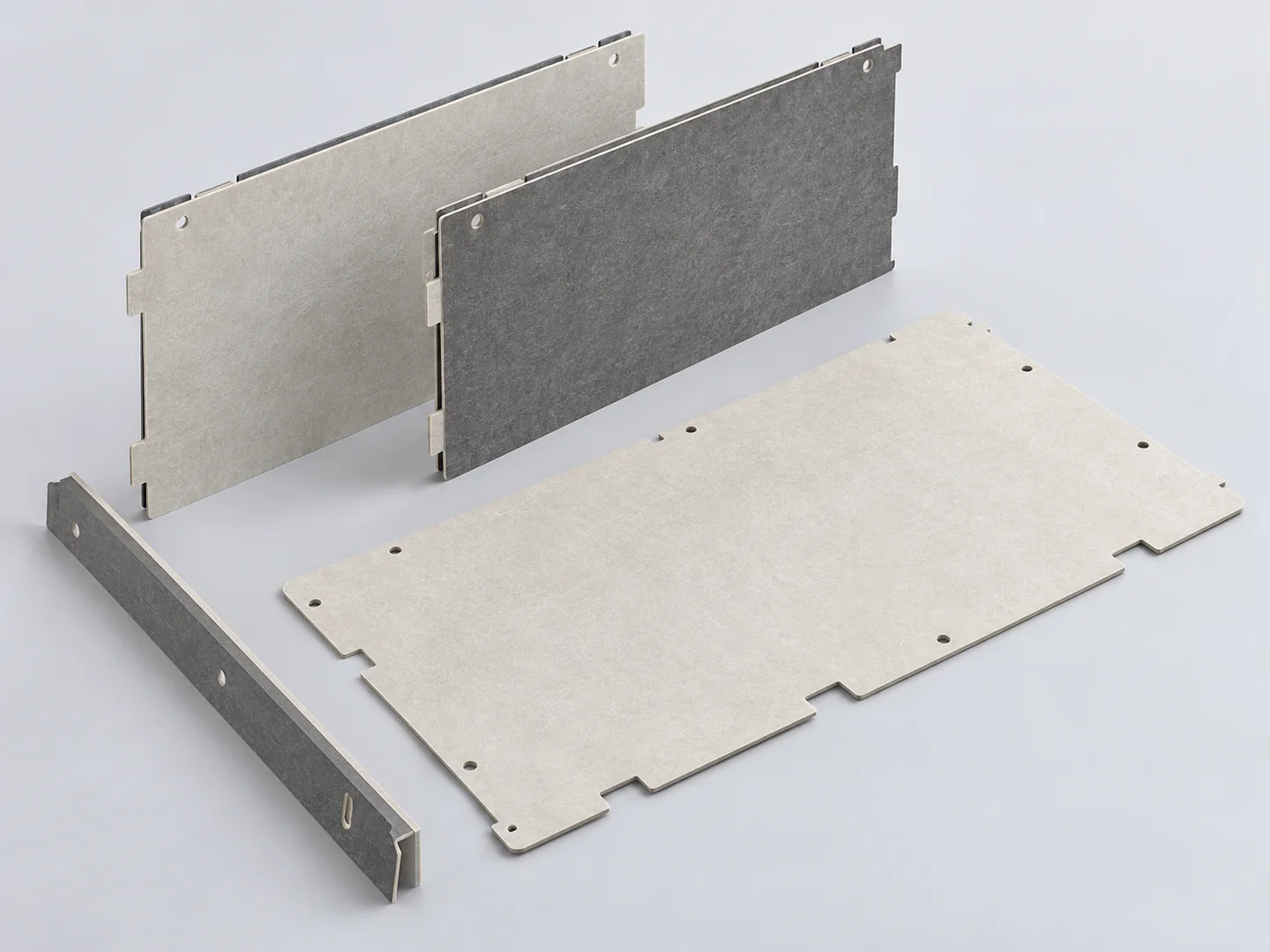
Barrier, shield, insulation and vent-position components for stationary storage from cell to installation interface.
Application requirements
Requirements for this battery application
ESS safety decisions extend beyond a cell or module: gas composition, deflagration risk, re-ignition, rack spacing, enclosure and installation geometry matter.
We support converted components within a layered ESS strategy and keep component claims separate from system certification or installation-level test results.
Position and function
Installation positions and primary functions
Installation positions
- Cell and module interface
- Rack partition
- Cabinet wall and door
- Container vent path
- Cable and busbar insulation
Primary functions
- Propagation delay
- Compartment separation
- Dielectric isolation
- Sealing and vent-path integration
Selection criteria
Key inputs for component selection
| Decision dimension | What must be defined |
|---|---|
| Test level | Clarify cell, module, unit or installation-level evidence. |
| Gas event | Define vent route, pressure and deflagration considerations. |
| Service | Include climate, maintenance and stationary duty cycle. |
| Scale | Review joining, fastening and inspection for large converted parts. |
Data required
Inputs for an engineering review
- ESS unit and rack architecture
- Chemistry and module configuration
- Target code or test method
- Compartment and vent-path drawing
- Environmental and maintenance conditions
Continue the evaluation
Related products and applications
Frequently asked questions
Clear answers before sampling
Is UL 9540A a component certification?
No. It is a test method applied at defined levels. A loose component should not be described as UL 9540A certified.
Can a barrier replace ventilation design?
No. Thermal separation and gas management address different parts of the safety strategy.
What evidence is most useful?
Exact assembly level, configuration, test conditions, results and limitations are more useful than a standalone material claim.
Custom engineering review