Application engineering brief
Battery Pack Fire Protection Components
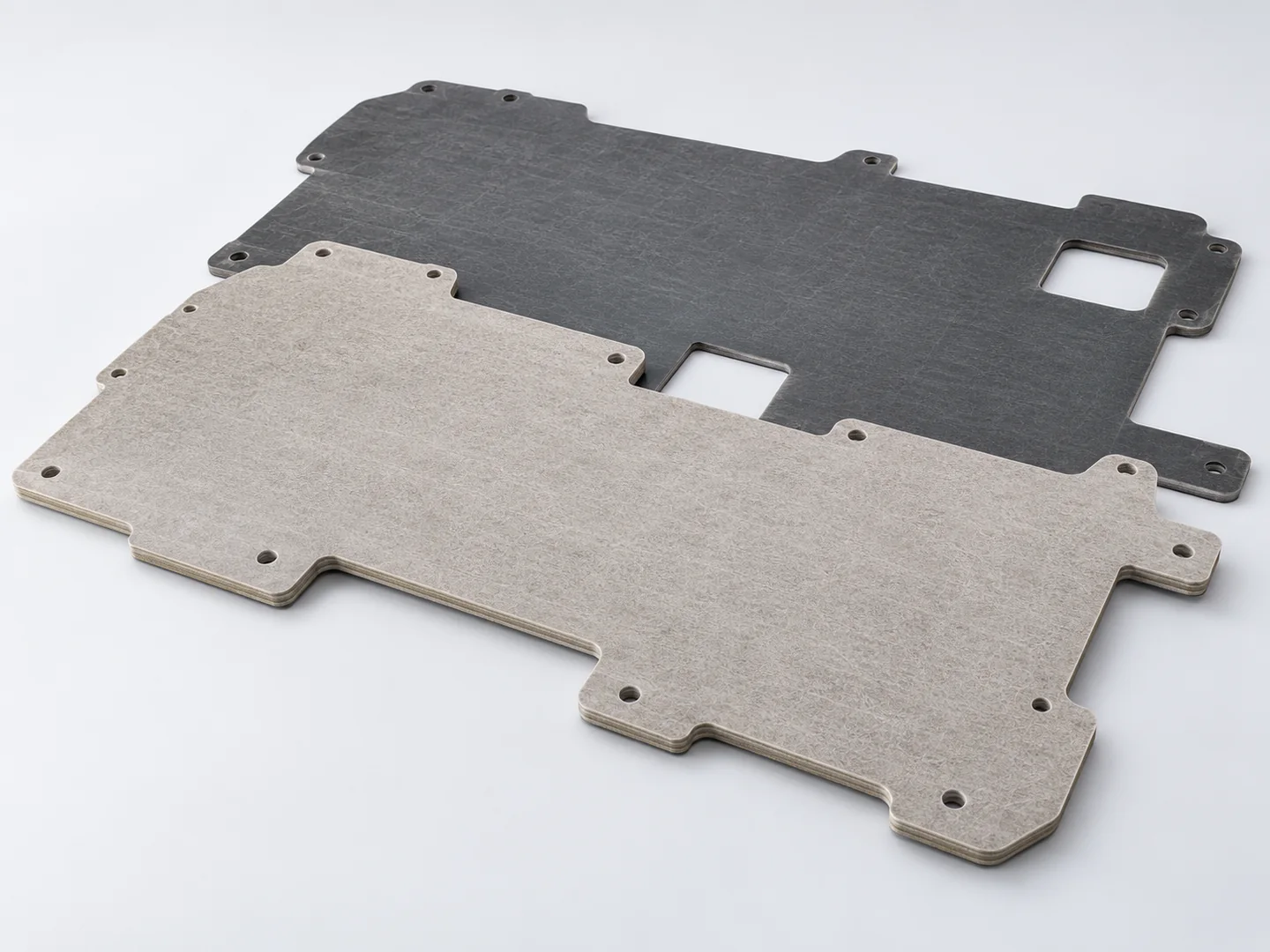
Converted fire shields and layered barriers for pack lid, underbody, module separation and enclosure interfaces.
The engineering problem
Start with the installed interface.
Pack components face different internal and external exposures, plus vehicle vibration, impact, fluid and assembly constraints.
We define a shield or barrier by the exact position, exposure, protected-side limit, attachment and post-conditioning requirement.
Position and function
Where this component works—and what it must do
- Pack lid
- Underbody and internal shield
- Module partition
- Service cover
- Enclosure seam
- Transient heat shielding
- Flame and ejecta separation
- Dielectric layer integration
- Seam and penetration management
Selection logic
Decision data customers and engineers expect
| Decision dimension | What must be defined |
|---|---|
| Direction | Separate heat source side and protected side. |
| Integrity | Define erosion, cracking and attachment acceptance. |
| Mass | Balance thickness and areal weight with vehicle targets. |
| Conditioning | Include vibration, impact, fluid and thermal cycles. |
Data required
Send these inputs for a useful first review
- Pack cross-section and shield position
- Internal or external exposure
- Temperature/heat-flux profile and duration
- Mounting and penetration details
- Weight, environment and validation plan
Continue the evaluation
Related engineering pathways
Frequently asked questions
Clear answers before sampling
Does a fire shield make the pack fireproof?
No. It is one component in the pack safety strategy and only supports defined tested conditions.
Can the shield include several layers?
Yes, when lamination or assembly is feasible and each layer’s function and compatibility are defined.
What should a test report show?
At minimum: exact stack, thickness, conditioning, exposure, fixture, measurement locations, results and limitations.
Drawing-led response